Monday Museum #5: Frieze, Mammoth!
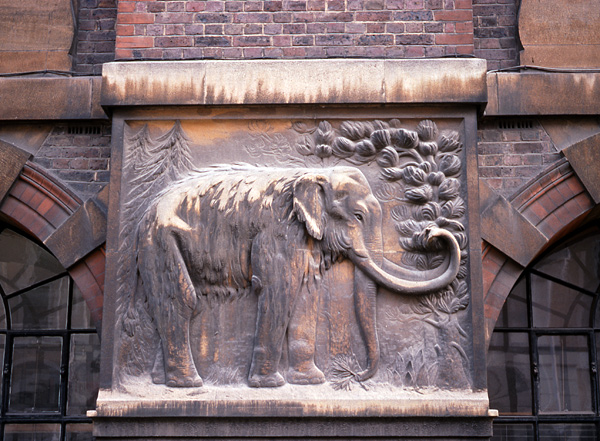
These days, we often hear from museum theory people that we need to “take our museums outside,” to find ways of showing parts of the museum on its exterior. If we can actually place some exhibits and programs outside the building’s walls, we can better share our museums with the community.
As this charming relief on the Sedgwick Museum shows, these sorts of ideas are far from new. The Sedgwick, which is the geological museum of Cambridge University, was opened in 1904.
OK, so it probably isn’t really a frieze, but how could I resist?
The Perspective of Time
Leaf ghosts in the Vancouver morning rain
I was in Portland, Oregon earlier this week, presenting a paper at the Coastal and Estuarine Research Federation meeting. This big conference attracted people who study all aspects of modern coasts, with a particular focus on human-caused environmental change. Even though it was very different from the paleontology-oriented meetings I usually attend, I decided to go to the CERF meeting because there was a special session on jellyfish blooms.
I have been studying fossil jellyfish for a few years, so this seemed like a great opportunity to meet some of the people who really know about modern jellies. It turned out to be a really interesting session, they were wonderful people, and we all went out for dinner afterward (at a Thai place and no, we didn’t eat any jellyfish). In the course of the evening’s conversation, there was one comment that really stuck with me.
One of the biologists said that she had enjoyed my talk, and that, “It really put all that we are doing into perspective. Here we are talking about jellyfish blooms in the past 10 years, and you are talking about jellyfish blooms half a billion years ago. When I hear paleontologists or astronomers I realize that what we are looking at is really just a little blip.”

Moon jellyfish (Aurelia) at the Vancouver Aquarium
When we compare ourselves to scientists examining present-day issues, it is obvious that paleontologists have to work on an incredibly broad scale. We don’t generally know what colour our creatures were, we cannot observe most of their behaviours, and we can’t see how their populations varied year-to-year, or even century-to-century. We also cannot generally apply some of the modern biological approaches involving genetics or biochemistry. But what we can bring is an understanding of how organisms have changed over long periods of time. We can see what creatures were present hundreds of millions of years ago, and determine what has been lost as the Earth has changed. Time is a powerful tool for the study of evolution, a tool that needs to be accepted, grasped, and used by biologists.
Time is also an under-used tool in our ongoing discussions with those who oppose a scientific understanding of the universe. They can argue all they like that Evolution by Natural Selection is “just a theory” (even though there irrefutable evidence that evolution itself is an undeniable fact). But the evidence for deep time is all around us.
This is why the creationists don’t spend much time talking about time; they don’t really want their audience to start examining the evidence. If people begin to recognize how much time has obviously passed, then of course it also becomes much easier for them to accept that the world and life have evolved.

Passing seasons: the Portland Classical Chinese Garden
Using our own senses, the time we perceive is measured in the passing of the seasons, the passing of years, and our own aging. We do not tend to be aware of time much beyond our own lifetimes, or perhaps the lifetimes of our parents or children. Educational systems, by and large, do a very poor job of teaching children about the existence of deep time. History classes are usually focused on the past few hundred years, and more and more the teaching of history seems to emphasize things that happened in the past century, or even the past few decades.
If we go outside and open our eyes to it, evidence of deep time is almost everywhere. It is in the landscape, the rocks, the oceans, the stars, even the gases that make up our atmosphere, but those who are not taught to read will get no benefit from sitting in an entire library of fabulous books.

Young landscape: a volcanic cone south of Mount St. Helens, with Mount Adams in the background
After I left Portland, I went to Vancouver, BC, for a day. Leaving Vancouver, I took the new Canada Line train to the airport. Standing in that packed car between the working mothers, uniformed flight crew heading to the airport, and pierced hipsters carrying skateboards, I realized that the train itself was a good metaphor for humanity’s relationship with time. And that relationship is also a partial explanation for why we treat the Earth’s precious resources in such a cavalier manner.
We had waited on the station platform, and for us the train did not exist until we saw its lights reflected from the advertisements on the tunnel wall. We got onto the train and rode along with the rest of humanity. Periodically, some of them would get off and new ones would get on, as we continued on our journey. The view outside changed as we travelled, from tunnel walls to malls and suburbs, but most passengers took little notice of this. When we arrived at our destination, we waited for the doors to open, got off, and left the train behind. Once we walked onto the platform, we gave the train no further thought (and those of us arriving at the airport were, of course, leaving the train so that we could ascend in another plane).
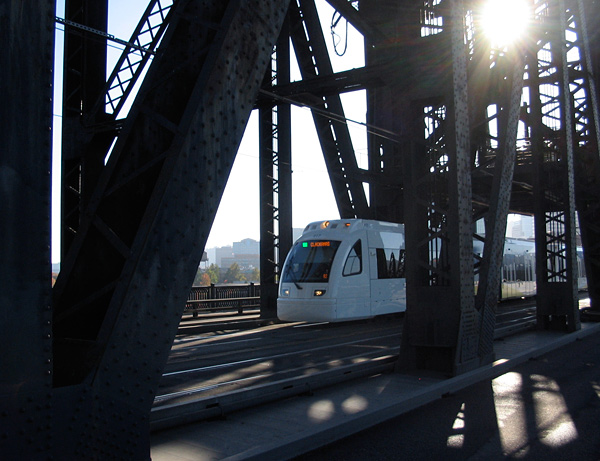
MAX Light Rail, Portland
Unlike most of the rest of humanity, paleontologists, geologists, and astronomers are concerned about the history of our train. We want to know how it came to be, what stations it passed through before it arrived at our platform, and what will happen to it after we disembark. This work could well be important to all of us. If this train’s wheels fall off, do you think that another one will come along any time soon?

Portland Classical Chinese Garden
© Graham Young, 2009
Monday Museum #4: The Cretaceous Marine Case
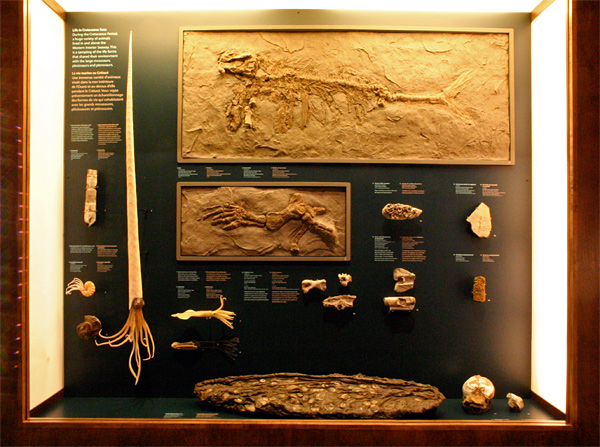
(photo © The Manitoba Museum, 2009)
At the end of last week, we opened the second part of our renovated Cretaceous exhibits at the Manitoba Museum. I am delighted with all of these exhibits. I’m sure I am biased, but I think they are among the best things our museum has done, and it was hard to decide what to write about first. I am starting with this case since it contains so many beautiful and unusual fossils.
When a museum curator is beginning to formulate an exhibit on any given topic, he or she is usually confronted with one of two scenarios. Either the collections have a shortage of high-quality material on that topic, or there is such an abundance of wonderful material that tough decisions have to be made. I had to deal with the latter circumstance in trying to select material for a case of Cretaceous marine fossils. Manitoba, like other parts of western North America, is rich in Cretaceous fossils, and our collections room includes many cabinets of Cretaceous vertebrates and invertebrates.

This turtle arm was in the gallery before, but it has been remounted in a completely different way. I like that it now looks as though it is signalling a left turn! There was a conscious effort made to display the fossils a bit more like works of art. The cluster of fish vertebrae on the right has been a favourite specimen of some Natural History staff for years; it was wonderful to finally get it into the gallery. (photo © The Manitoba Museum, 2009)
In a way, the selection process was a bit like a tryout for a sports team or arts performance. We would pull out batches of specimens, consider what would fit and how it would work, and eventually choose the stars that would be shared with our visitors. The remaining specimens would be sent back to the minor leagues of the collections room, perhaps to await their future chance to appear before the public.
Our designer, Stephanie Whitehouse, did a great job with planning these exhibits, but she had to be tough with me when it came to choosing specimens. Curators are notorious for wanting to put out far more pieces than can reasonably be fitted into the space. As the design progressed, and the spatial relationships became clearer, Stephanie would periodically have to come back to me and say, “You’re going to have to cut something from this area.” I would hem and haw, because I really did want to include the lot of them, but I would eventually have to admit that she was right. And the case “works” as a result.
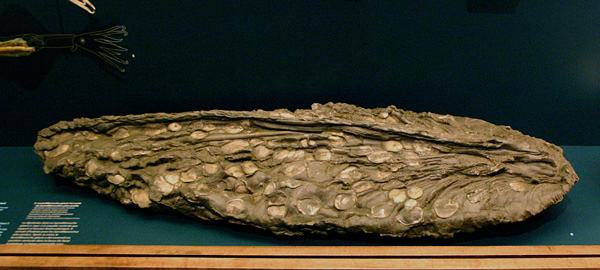
This giant inoceramid clam is encrusted by many smaller bivalves. The specimen was collected in western Manitoba by Kevin Conlin. (photo © The Manitoba Museum, 2009)
One of the problems with showing Cretaceous marine fossils is that the remains of cephalopods (ammonoids and belemnites) look quite different from the living animals. We needed some way of illustrating how they really were, and early in the conceptualization of this exhibit Betsy Thorsteinson suggested that she could make wax models of some selected forms. Betsy approaches every project with remarkable rigour and attention to detail, and her resulting ammonoids and belemnite add wonderful life and colour to the fossils they depict.

Each of Betsy's spookily real cephalopod replicas is located beside or above the fossil it represents. (photo © The Manitoba Museum, 2009)
Yes, I know that Monday Museum was posted on a Wednesday this week. I am still at the conference in Oregon, and the first part of the week was rather busy as I was presenting in a session on jellyfish blooms. More on that later …
Eastend, 2008
Yesterday I flew across western North America, on my way to a conference in Oregon. I was able to once again see portions of the grand landscapes that overwhelm human-made features across so much of the west: the undulating surfaces of the great sand hills, the badlands incised into the high prairies, and of course the mountains and Pacific coast. And this reminded me that I had been meaning to finish some pieces about doing fieldwork around Saskatchewan’s Cypress Hills. But perhaps I might also stick in a completely unrelated photo from yesterday at the end of this piece …

The Cypress Hills
For the past few weeks we have been working at the Manitoba Museum to complete the second and final set of exhibits for our revised Cretaceous Life area. I am very excited about one of the pieces: a sample of the Cretaceous-Paleogene boundary (formerly called the Cretaceous-Tertiary, or K-T). It was particularly rewarding to see this exhibit installed, because this completes a process that has been long, involved, exhausting, and occasionally painful.
When we were discussing an exhibit to depict the end-Cretaceous extinction, one possibility that came up consistently was the idea of displaying a sample of the sedimentary succession across the boundary. Ideally we would have shown people what the boundary looks like in Manitoba, but unfortunately it is only known in the subsurface here, in the Turtle Mountain area. To collect the sort of large sample that would work in an exhibit, we would need to travel westward.
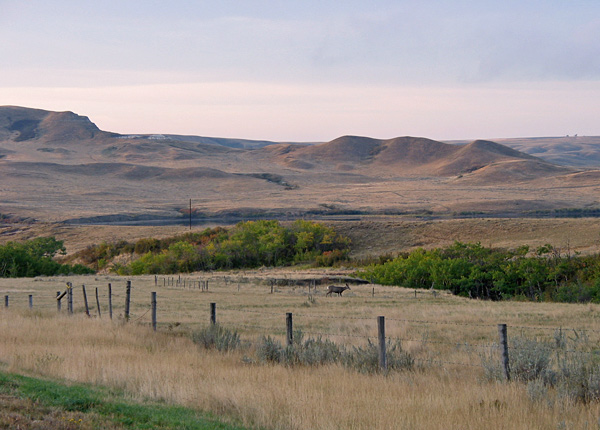
Mule deer in the Cypress Hills
Some years ago I had visited one of the classic K-T sites in the Frenchman Valley near Eastend and Shaunavon in Saskatchewan, so I suggested to the museum that we could consider sending a crew out to collect from this site. Thus it happened that just over a year ago, I drove to southwest Saskatchewan with museum artists Betsy Thorsteinson and Debbie Thompson, and cameraman Bruce Claydon. The plan was that I would locate the appropriate horizons for our sample, and would then assist Betsy and Debbie as they packaged it for removal from the ground. Bruce would film our work. It all sounds so simple, doesn’t it?
As I will explain in the next piece, it was not simple, of course. New types of field projects never are. But right now I just want to talk a little bit about Eastend.

Eastend, with the hills behind
Most human settlements are “one ofs.” When I visit a small town on the prairies, I am usually able to say that it is “one of” many prairie towns, all of which share similar characteristics (stores along a straight main street, curling rink, diner, Co-op …). They may not be identical, but they are certainly familiar, members of a recognizable group. The same could be said of villages in the Maritimes, or industrial cities in the US Midwest, or villages in central Scotland. I’m sure you know what I mean.
Eastend is not a “one of.” Instead, it is a “one off.” It is one of those rare locations where, when you are there, you have the feeling that you could not replicate that experience anywhere else. Of course world cities like London and Beijing are “one offs” – it would only be natural when you are at one of the crossroads of history that you would be in a unique location. But for a small place to be a “one off,” it has to be really special. And very often it has to be the end of the road, a jumping off point, the last place before you enter terra incognita. Churchill, Manitoba is like that, and so is Eastend.
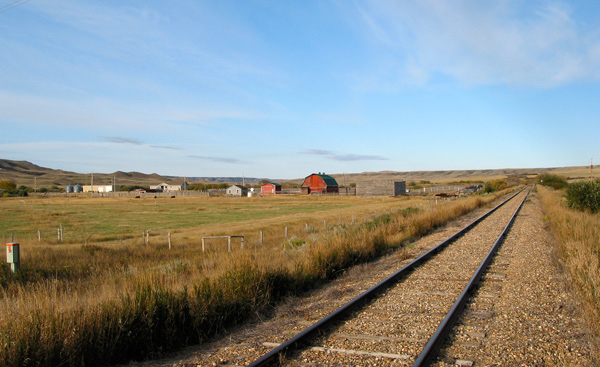
Early morning just outside Eastend
Eastend was apparently named because it is at the eastern end of the Cypress Hills. And the hills, which I think are among the most beautiful anywhere on this planet, give to the town their wondrous colour, light, and form. Maybe without them Eastend would be an ordinary prairie town, but I don’t think there is any way you could separate the town from the hills. The hills bring to Eastend a modest number of tourists, but they have also brought many unusual individuals: artists, writers, and craftspeople. Eastend is a centre for ranching and farming, but with a twist. It does not have the typical tourist town’s affectation of brushed-on faux sophistication. Rather, it gives subtle hints of hidden complexity. Hints that, if you hang around for a while, maybe it will let you in on some of the secrets.
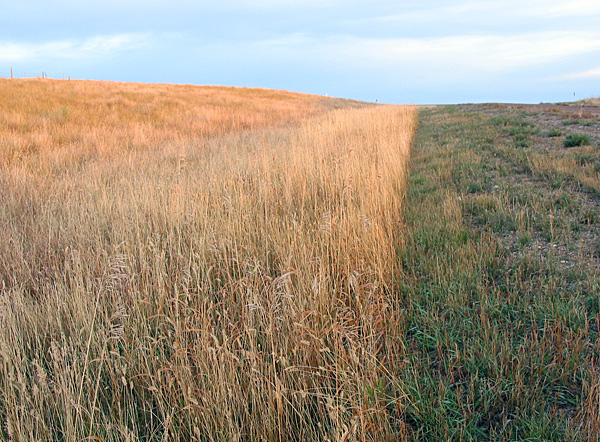

Some of the secrets are under the hills, and they have brought the town much of its modern-day fame. In this dry country, a hill that is steep enough will have its surface crumble and erode, exposing the layered sediment that is hidden so close beneath. Along the river and creek valleys, these crumbling surfaces form badlands, and the badlands radiate outward beyond the hills themselves. The bones of dinosaurs and other long-dead creatures poke out of the exposed sediment in places, and these have attracted fossil-hunters, both amateur and professional.
Dinosaurs are not “thick in the ground” here the way they are in some parts of Alberta, but when they are found they can be quite unusual. Most unusual of all is Scotty, a near-complete Tyrannosaurus rex that was collected near the Frenchman Valley a few years ago. And Scotty has, in its own way, given the town a special gift. Eastend is now home to a beautiful little dinosaur museum, an interpretive centre that houses exhibits about the T. rex and other fossils in this area, and a substantial facility in which the bones are prepared and housed. I realize that this was not a pure and simple gift, since people from this region and other parts of Saskatchewan had to do an immense amount of work to ensure that the museum came to be. But now that it is done, surely that just makes the gift even more special?

If you follow T-Rex drive, you will of course arrive at ...
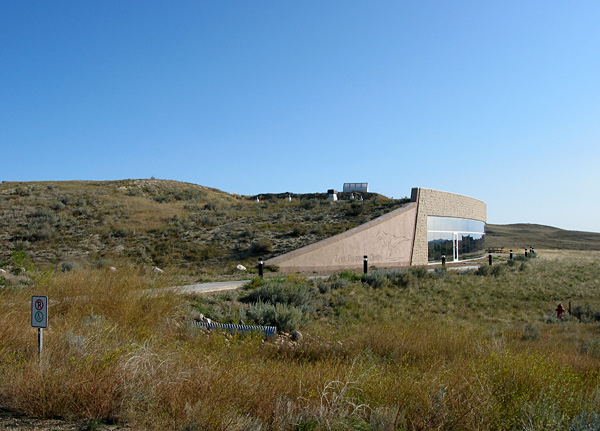
... the beautiful T. rex Discovery Centre, built into the side of a hill. Inside the centre you will find ...

... exhibits including these dinosaur heads and skulls.
© Graham Young & The Manitoba Museum, 2009
I would like to thank Tim Tokaryk of the Royal Saskatchewan Museum, and Sean Bell and the other folks at the T. rex Centre, for their very kind hospitality and assistance during our stay in Eastend.
As I promised (or threatened) at the start of the piece, I couldn’t resist posting one completely unrelated landscape image from my trip yesterday:

Lit by the setting sun, the top of Mount St. Helens looks like an iceberg floating in a sea of cloud.
Monday Museum #3: Under Construction
For the past few months we have been working to upgrade our Cretaceous exhibits at the Manitoba Museum. These had been almost unchanged since some time in the Late Pliocene (well, the early 70s, anyway), and were definitely showing their age. In the spring we opened the first part of these exhibits, representing an introduction to the Cretaceous and the Cretaceous terrestrial (land) record.
We have continued to work on exhibits and are now within spitting distance of finishing the second part: the marine Cretaceous and the end Cretaceous extinction. Which is a very good thing, because we are scheduled to remove the hoardings and open this to the visitors next weekend.

At the moment the boundary between the Cretaceous and the Cenozoic is graphically represented by this hoarding (yes, that's a ground sloth in the foreground). But wait ... (photo © The Manitoba Museum, 2009)
The cases have been built, the panels designed and sent for output, specimens prepared, models created, mounts constructed, lights installed, and video edited. For the past few days we have been occupied with fitting specimens and models into their cases. This is mostly very pleasant, since we know the end is close and are beginning to see what it will all look like. Nevertheless, it is also slow, painstaking, and occasionally exasperating.
Next week I hope to show you the first of the finished results, and in the interim I may talk a bit more about how we acquired some of the pieces. But now I’d better get back to work on it, so you will have to content yourselves with the view through the hoarding …
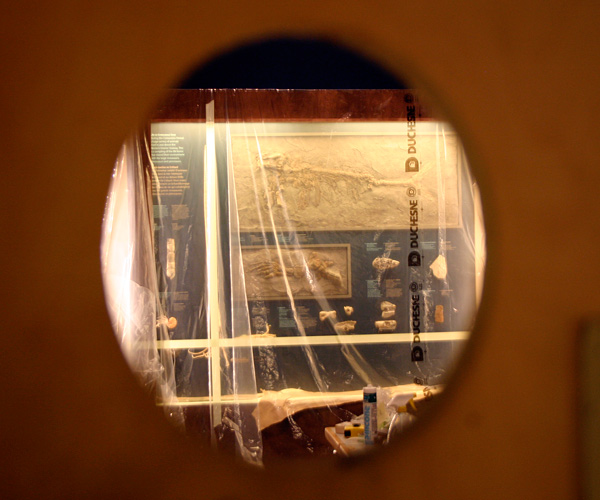
(photo © The Manitoba Museum, 2009)
Monday Museum #2: The Hadrosaur Foot
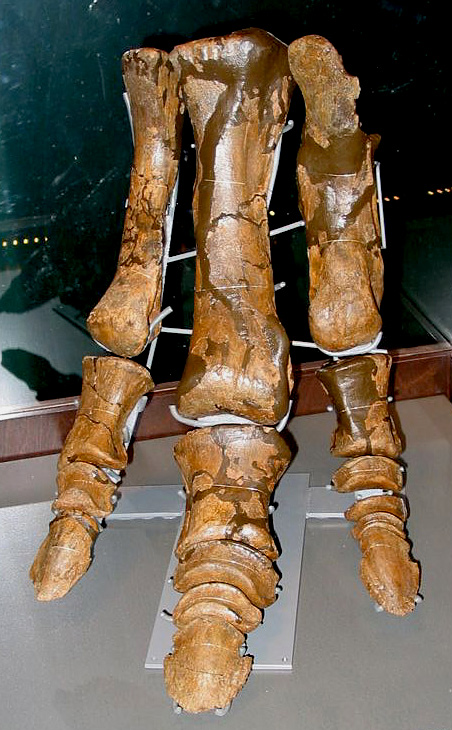
Hind foot (pes) of a hadrosaur, on exhibit in the Manitoba Museum (photo © The Manitoba Museum, 2009)
Most items on exhibit in a museum provide links to the past. Many also link us to the past versions of that museum. This foot of a hadrosaur (“duckbilled dinosaur”) was included in the first batch of renewed Cretaceous exhibits that we opened at the Manitoba Museum this spring. Since I have known it from the instant it came out of the ground, I am particularly attached to this foot (so to speak).
When I look at this piece, I don’t just see an attractive exhibit. And I don’t just see the dinosaur living on its ancient floodplain 76 million years ago. Rather, I see the valley of the South Saskatchewan River in southern Alberta, where we collected the foot (and much of the rest of this hadrosaur) in 1994. I feel the heat of that blinding June sun reflected from the rocks. I breathe the dust emanating from sandstones and popcorn mudstones. I hear the high calls of the prairie falcons. I watch rusty vans bumping along that late afternoon dirt track across endless fields, the wary pronghorn antelopes always keeping themselves close to our horizon. I see us strolling down the centre of Empress’ empty main street, heading to the bar for a Kokanee at the end of a long and rewarding day.
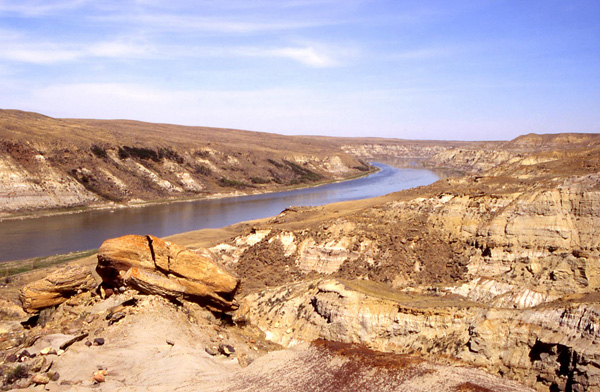
The South Saskatchewan River valley, 1994 (photo © The Manitoba Museum)
Beyond that sense of place, I see even more strongly the people who have worked with that dinosaur and that collection. Some of those people are gone: I watch my predecessor George Lammers, cheerfully directing this week’s crop of field volunteers as they patiently toil to remove sandstone overburden. Others are still very much with us: I observe Debbie Thompson’s younger self in the lab, painstakingly preparing and restoring the bones of the foot, rounding out and smoothing each crushed tarsal. Finally I see the skilled workshop and collections staff just a few months ago, planning and constructing the complex mount that supports, protects, and exhibits the foot to maximum advantage.
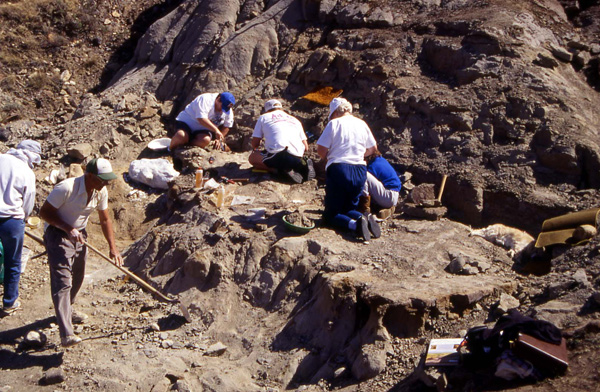
George Lammers (L, holding shovel) leads the 1994 dinosaur dig. (photo © The Manitoba Museum)
This foot is just a single specimen, on exhibit in a single provincial museum. Yet it is the repository of multiple pasts and stories. How many stories are held within the objects in this museum alone? And how many are there in all museums combined?
The Uplands: October
Dave Rudkin and Michael Cuggy were here for a research visit this week. Dave and I had just enough time for a quick collecting trip to the Grand Rapids Uplands.
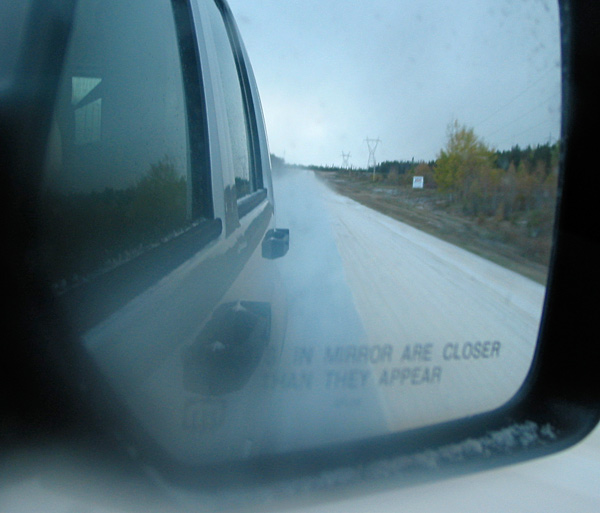
Leaving the snow behind on Wednesday morning
October fieldwork in central Manitoba is always a tricky proposition. Sometimes you can be lucky and have fabulously crisp, sunny days. In previous years, however, we have had to cancel trips due to autumn storms, and this year we discovered just how quickly lake-effect snow can change the landscape.
Dave’s plane was late arriving in Winnipeg, and by the time we gathered his baggage and left the airport it was getting toward noon. We drove almost nonstop to Grand Rapids, pausing only for gas and “road food,” but still just managed to get to the field site at 4:30 pm. A flock of juncos skittered away as we bumped the vehicle across the gravel, reached our parking spot, and unloaded gear in the slanting light. The air was clear and cold, maybe just above freezing. On our drive north we had seen areas with significant snow on the ground; there was no snow on our site, so we really weren’t going to complain too much about the weather.
It was chilly collecting in toque and gloves, but what was much more striking was the change to basic field conditions in comparison with a previous visit just two months ago. On the positive side, there were no biting flies, we did not overheat or sunburn, and little dust was generated as we hammered and moved the thin slabs of dolostone.
But there was one negative aspect that surprised me. Many of the slabs that would have been easily extracted in the summer proved almost immoveable now. Pounding on the chisel produced a strangely dead, heavy thump, instead of the usual heartening ringing. We were to discover that this was caused by the mud between the layers, which had frozen into a remarkably adhesive mortar. And when a slab was finally extracted and flipped, the underside was usually coated with a a thick layer of rime and mud.
We began to realize that we could not follow the summer approach, in which we would patiently clean off and examine each surface of the rock. Rather, all likely looking slabs were grabbed and packed up for cleaning back in the lab. As it turned out, this “lucky dip” approach would pay dividends. But perhaps I will save that for the end of this piece.
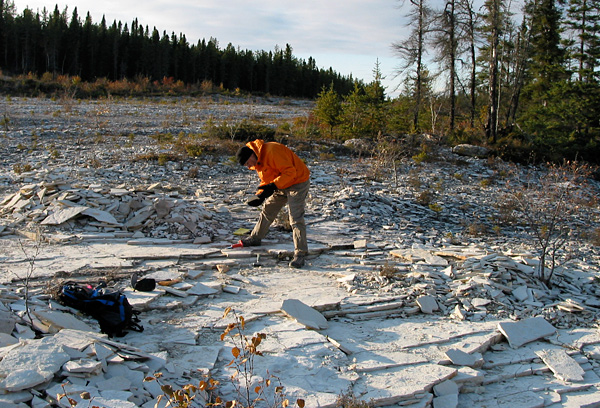
The low angle of the late afternoon sun makes some fossils "pop" out of the rock ...
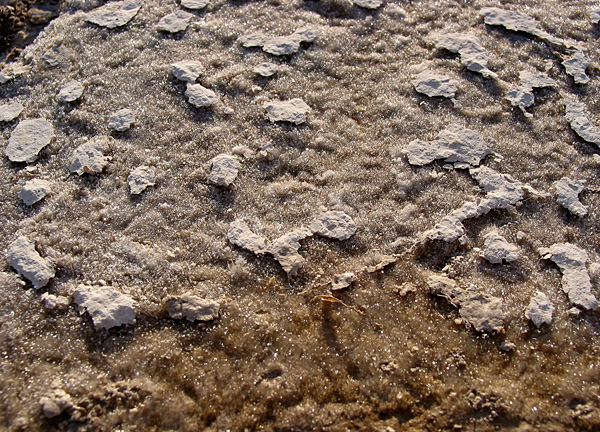
... but other fossils are rendered invisible by the frost-covered surfaces.
By 6:30 the light was fading, and we packed up so that we could find our way back to the highway before complete northern darkness set in. In two hours of collecting under unusual conditions we hadn’t done badly at all. We had gathered enough fossil slabs to nearly fill one Rubbermaid tub: jellyfish, a horseshoe crab, and parts of eurypterids, all snuggled into foam wrappings for their trip to Winnipeg.
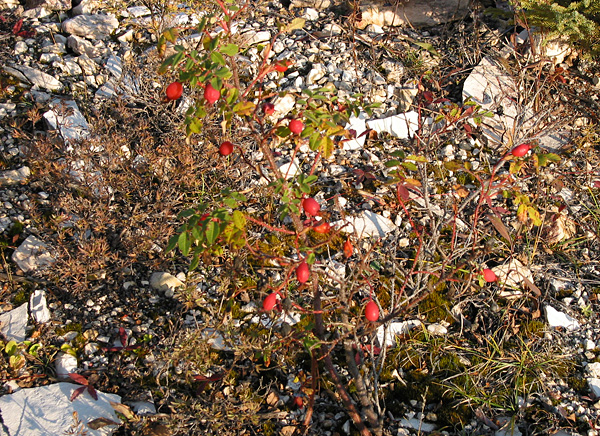
Rose hips
Back in Grand Rapids the Chinese restaurant was doing a fine job, and we enjoyed their black pepper beef and chicken. It was still clear and cool as we wearily made an early night of it, but by morning things had changed considerably:
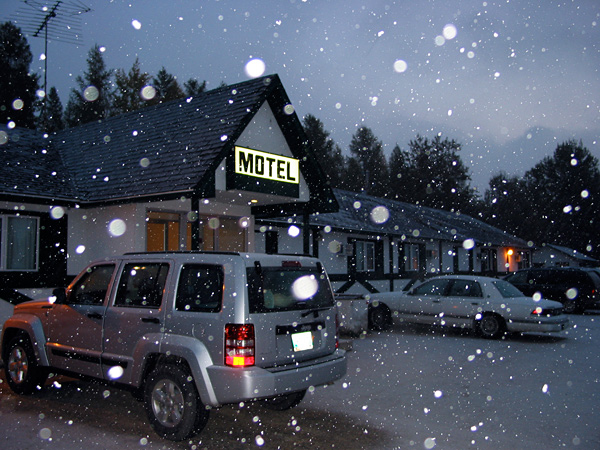
An "interesting" dawn outside the Grand Rapids Lodge
We were up early to take advantage of all the daylight available. Light flurries were falling as we headed to the Pelican Landing for the traditional breakfast of eggs and bannock toast. By dawn, heavy lake-effect snow was swirling across the highway. Grand Rapids sits on a short stretch of the Saskatchewan River, between Cedar Lake and Lake Winnipeg. This location makes it prone to summer fogs, and, in fall, to lake-effect snow and rain. The cool winds passing over relatively warm water can pick up an immense quantity of moisture, forming unpredictable, billowing grey clouds.
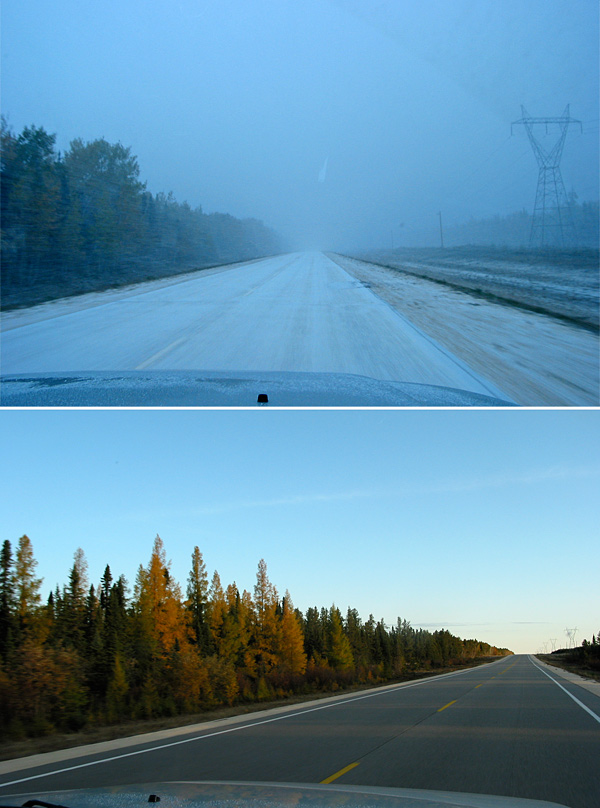
What a difference a few minutes can make! Fortunately for us, the weather improved dramatically as we moved away from the lake.
We drove out of the snow, the clouds replaced by a bright morning sun. Along the roadside, the larches (tamaracks) put on a wonderful show of autumnal colour, as within a stand they varied from delicate lime green to a deep orange yellow. Dave slowed the Jeep to a crawl as we passed two flocks of sharptail grouse, but the numerous frames we shot did not result in a single useable photograph. We didn’t even attempt a picture of the swirling flocks of snow buntings; it was far more worthwhile just to observe and marvel at their coordinated chaotic flight.
Back on the site, the good fossil-hunting luck continued, in spite of the cold. Unlike the summer, when we were tempted to use the vehicle’s air conditioning to cool us during breaks, we now got into the Jeep at midmorning to warm cold-numbed fingers. Still, by early afternoon we had filled another bin and two large bags with unusual fossils.
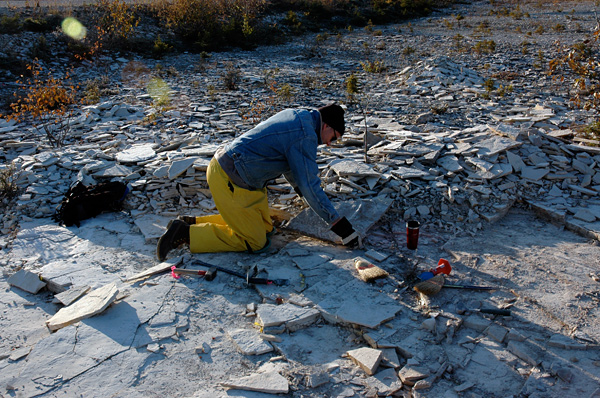
Collecting fossils in -3°C weather required appropriate layering of clothes (note the essential cup of hot coffee). (photo © Dave Rudkin, Royal Ontario Museum)
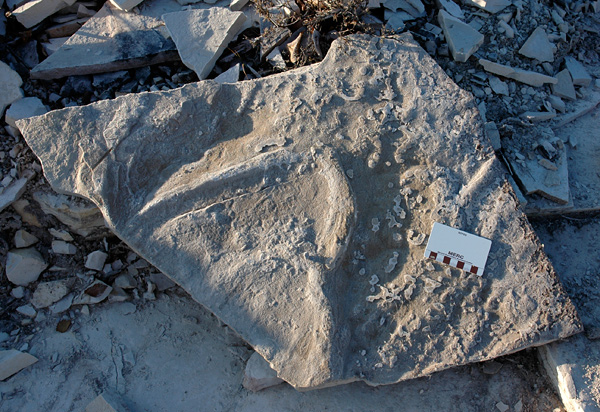
We were intrigued by this huge burrow-like structure, which was on the underside (sole) of a slab. (photo © Dave Rudkin, Royal Ontario Museum)
South toward Grand Rapids it was still snowing. A considerable thickness of wet whiteness had accumulated, and the curves north of town were slick and icy. The snow diminished as we continued southward away from the lake, but patches of flurries extended well into the southern Interlake.
In the lab on Thursday and Friday our focus was on some of the unusual arthropods we had collected on previous trips, but we also managed to unpack and clean most of our trophies from this week.
And the fortuitous outcome of that “lucky dip” approach? On the back of one of the jellyfish slabs, covered with a thick layer of mud, was a large and beautiful eurypterid. Sometimes I think it might work just as well to collect at random as many slabs as the vehicle will hold, and haul the lot of them back to the lab. Sometimes.
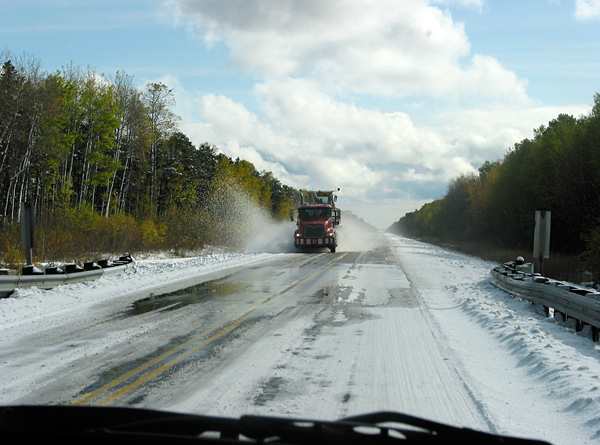
Passing one of the Twin Creeks on the way home
- © Graham Young & The Manitoba Museum, 2009
Monday Museum #1: Mineral Exhibits at VSEGEI
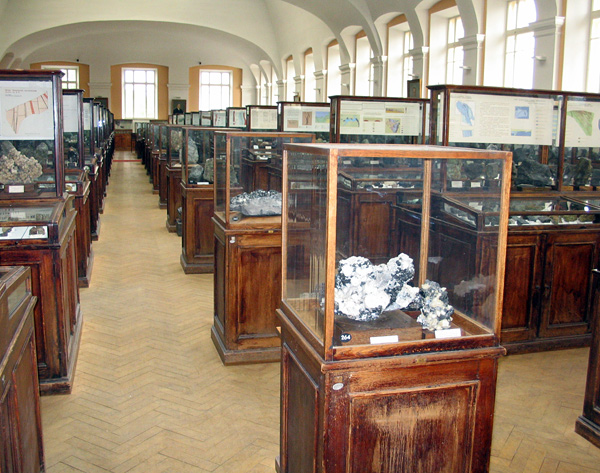
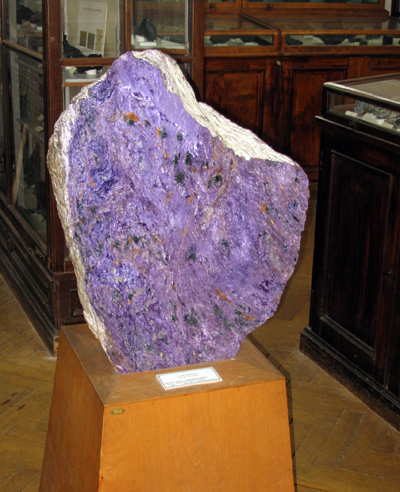
For the next few weeks I am going to test a new feature. Each Monday, from my stack of photographs of a variety of museums, both famous and obscure, I will try to present images of a single exhibit. This week, I am starting with an exhibit that is at once obscure and fabulous: the minerals at the Acad. F.N. Chernyshev Central Scientific Geological and Prospecting Museum, A.P. Karpinsky Russian Geological Research Institute in St. Petersburg (VSEGEI). Over the decades, VSEGEI gathered some of the finest mineral specimens from across the USSR. Anyone interested in rocks, fossils, and particularly minerals, could easily spend hours wandering through this delightful traditional museum, located on one of the upper floors of the research institute.

A monstrous beryl crystal
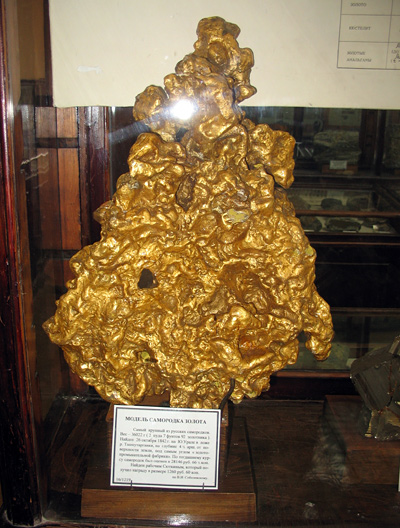
This nugget is a model, according to the label. However, many of the other wonderful pieces in the gold case (below) appear to be genuine.


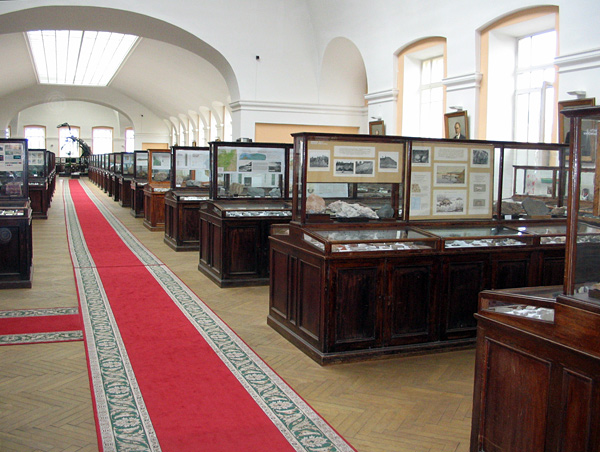
So many exhibits, so little time! I will post some images of the fossil exhibits at a later date.
Sand, Sand, and More Sand
Sand is not a subject I generally consider to be “riveting”, and after my recent post about Lake Winnipeg beaches I thought that I would have very little to say about this topic in the foreseeable future. Nonetheless, when I saw the Spirit Sands of the Carberry Sandhills in their muted fall colours last Friday, I knew that I would have to post a few photos.

Every patch of landscape carries hidden within itself a history, a tale of how it arrived at its current form. As geologists and geographers have examined landscapes around the world, it has been our task to open them up and reveal their once-secret pasts and meanings. This process of finding the hidden stories sometimes reminds me of playing with one of those jokey matryoshka dolls of Russian leaders. The current ones start with Dmitry Medvedev on the outside. He is opened to reveal Vladimir Putin, followed by a reverse-order series of communist leaders, and ending with the czar in the middle.
The story hidden inside the Carberry Sandhills, about two hours west of Winnipeg, is much less sinister, but is in its own way infinitely intriguing. As they have been explored during the past century and more, these low hills have told us about their distant past along the margin of the immense glacial Lake Agassiz. Thousands of years ago, as the continental glaciers were melting northward, this ice-dammed lake occupied much of southern Manitoba and North Dakota. At times, the lake covered the entire Red River plain. Its expansion to the west was blocked by the abrupt rise of the Manitoba Escarpment, and its waters lapped against the base of that line of hills.

Like its modern descendent, the ancestral Assiniboine River flowed eastward from the high plains of Saskatchewan. This river was very broad, its sediment-laden waters fed by melting glaciers. Where the sandhills now stand, the river water met the lake, and as its flow was halted it deposited its immense load of current-transported sediment. This formed a large river-mouth delta. Years passed, and the lake receded northward, leaving the sediment as sloping hills of open sand, shifted by the snow melt and shaped into dunes by westerly winds.

The area of open sand in the modern-day sandhills is not immense, but the sand is nonetheless utterly impressive!
Those young sand dunes probably had little vegetative cover. If you could have stood in the middle of those tens of square kilometres of windblown sediment on a hot summer day, this part of Manitoba would have felt a lot like Saudi Arabia. But over time the plants moved in, and most of the modern-day sandhills are covered by grasses, junipers, spruce, a surprising variety of wildflowers, and even a few cacti. In the historic past there was more open sand than there is today; it was kept open by prairie fires and large grazing native quadrupeds. Since both of these are considered as enemies by civilized agriculture, they have become scarce, and in their absence the plants take over.

Tumbleweed
The sandhills are home to a variety of animal life, including unusual forms such as skinks and hognose snakes. In a previous visit on a hot summer day, as we walked along the path from the Devil’s Punchbowl we came upon a hognose snake, which first hissed fiercely at us, and then when that didn’t work, played dead. In the summer the sand itself is alive with small creatures such as tunnel-web spiders, and the air above is patrolled by a particularly nasty and voracious species of horsefly.
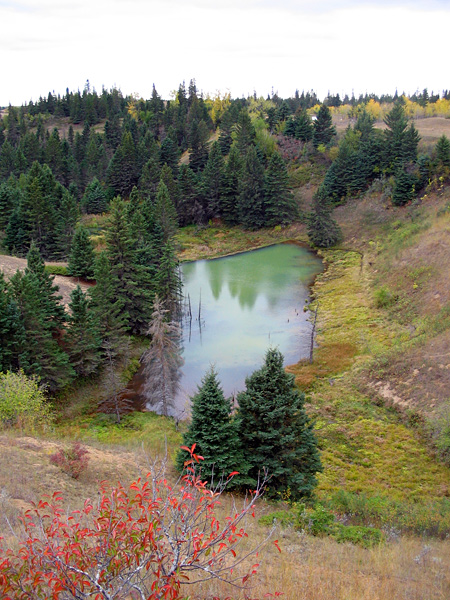
At the Devil's Punchbowl, the flow of water from underlying springs has caused the sand to collapse.
On such summer days the sand radiates a fierce and unyielding heat, but it also attracts crowds of visitors. Today, on a beautiful but cool autumn day, our car was the only one in the parking lot at mid-morning. We saw very few animals other than red squirrels, chipmunks, and a solitary grouse, but there was plenty of evidence that others were around (and probably saw us). There were many deer tracks, a variety of scats, and in one area there were tracks that appeared to be those of a skunk.
Keita was walking freely off the leash, but when some substantial coyote tracks crossed the path we decided that it would be best for such a small terrier to stay closer to us. As I explained to her, her cousins might enjoy meeting her far more than she would enjoy meeting them!
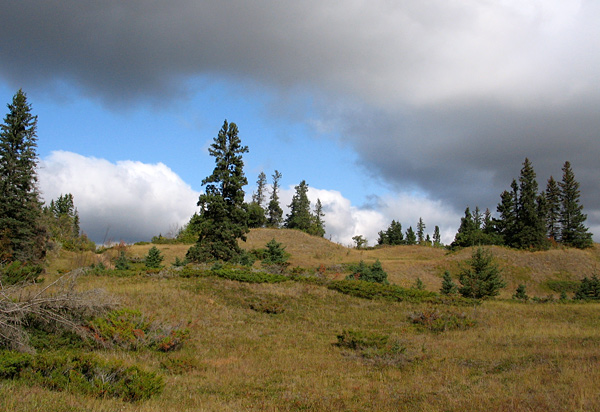
© Graham Young, 2009
Steven Kukla has pointed out that the Geological Survey of Canada has an interesting report on sand deposits in the prairie provinces at:
The Salt Marsh is an Ellipsis
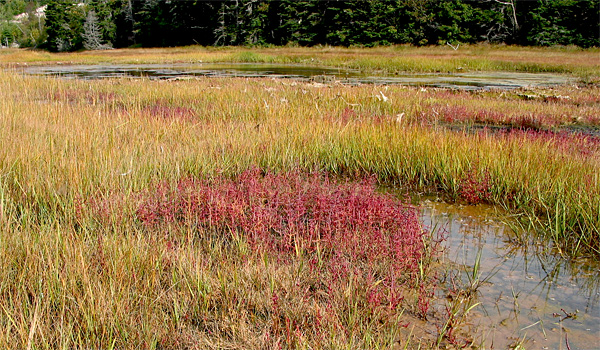
The salt marsh at Dipper Harbour, New Brunswick
Every marine shoreline constitutes a transition, a zone of change from dry land where most organisms breathe air, to water where the creatures are incorporated into their saline environment. But shorelines vary immensely in shape: some are abrupt and peremptory, while others can be so gradual that they are almost imperceptible. This shape affects the nature of the transition.
In a way, shorelines can be considered as the punctuation between sea and land. A steep sea cliff is an exclamation mark. The transition is exaggerated and absolute!

View from The Whistle, Grand Manan Island, New Brunswick
A narrow cobble beach is a period. The transition is definite, but it is not overstated.

Shore near Halfway Point, Churchill area, Manitoba
A broad beach is a semicolon; it leads us gently from one environment to another.
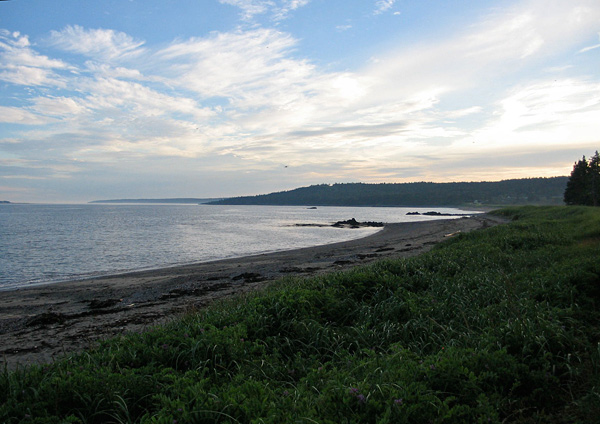
Beach near The Anchorage, Grand Manan Island
Sometimes a beach could also be a colon, since it can sponsor other environments such as dunes, lagoons, or ponds:

Ponds above the shore, Island of Colonsay, Scotland
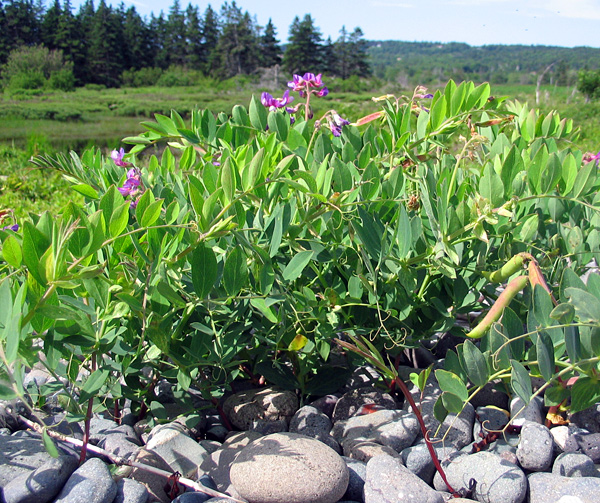
Beach pea between the shore and the pond, Whale Cove, Grand Manan Island
But what is the salt marsh? Following this logic, the salt marsh must be an ellipsis … it is not so much an unfinished thought, as a trailing off. It is a place of poorly-defined changes, of transitions so gradational that to really recognize them one must stand in one place and observe the minutiae as they vary through the day, or through the year.
The salt marsh’s shape and features are transformed as the tides pump water in and out through its reedy channels. Within the marsh is a mesh of interwoven microenvironments: some saltier, some much less salty, some wet, some mostly dry. But these change through the day, as the marsh alternates between soaking by saline tides, drying by sun and wind, and wetting by fresh rain and stream water. This variation makes the salt marsh a place of immense richness and dizzying complexity, even within an area the size of a suburban yard.
On a slightly larger scale the salt marsh is itself often part of a series of interconnected environments. Beach, dune, barachois (lagoon), marsh, channel, and meadow can blend almost seamlessly, one into the next.

Grasses and channels in the salt marsh at Dipper Harbour
The salt marsh is different from many other shorelines in that it is a habitat that owes its existence to biological evolution. Cliffs, rocky shores, beaches, and tidal flats have been present on Earth almost as long as oceans have been here. They are environments defined and created by the action of waves and currents.
But the salt marsh is there because plants have evolved to live on protected tidal shorelines. More than 430 million years ago, there were no salt marshes. All the sorts of places where we now see tidal marshes would have been monotonous, unpleasant mudflats. Salt marshes developed as salt-tolerant vascular plants evolved, possibly as early as the mid Silurian Period, about 425 million years ago. Marshes became more and more complex as plants and animals evolved to fit into its myriad of niches. The modern salt marsh is the outcome of the long interval of co-evolution since the mid Paleozoic Era.

The marsh at Dipper Harbour buzzes with life. Top to bottom are the salt-tolerant plant Salicornia rubra; spiders at the edge of a pool; abundant periwinkles in a channel.
In recent times, the interaction between human society and salt marshes has also evolved. Sometimes we have offended against nature. Hundreds of years ago people drained salt marshes (such as those at upper end of Bay of Fundy) so that the fertile land could be used for agriculture. In modern times, salt marshes have been considered as ideal sites for container terminals and petroleum refineries.
But we also have a long history of respecting salt marshes, and of utilizing their resources for food and fibre. And now we recognize the marshes as natural filters, as nurseries for fish and other marine creatures, and as places where we can examine the boundless complexity of life.

Fireweed behind the pond at Whale Cove
© Graham Young, 2009


 Ancient Shore