It’s Complicated
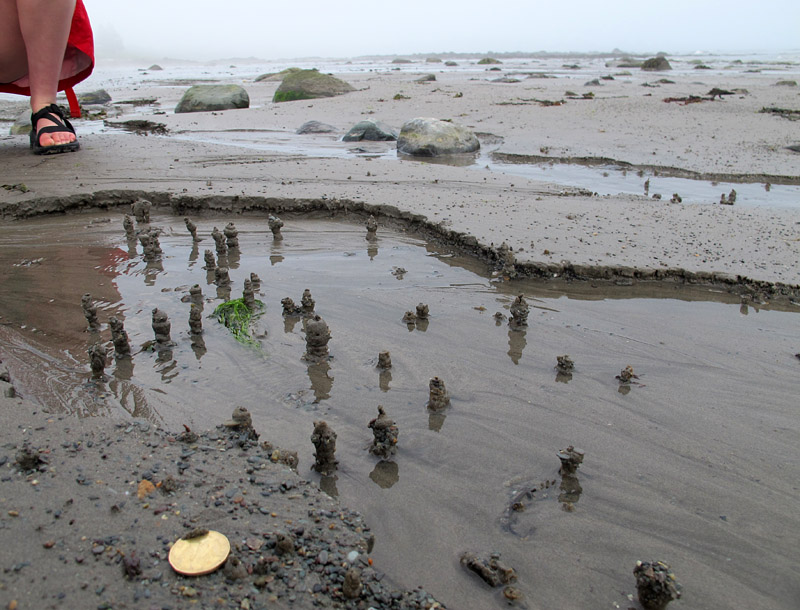
What are these strange structures in a tidal channel?
The Anchorage, Grand Manan Island, New Brunswick
We stroll along the beach at golden hour, but the haze of shore-fog this evening is far more silver than gold. The waves are dull steel, the wet sand is burnished copper, and the fog . . .
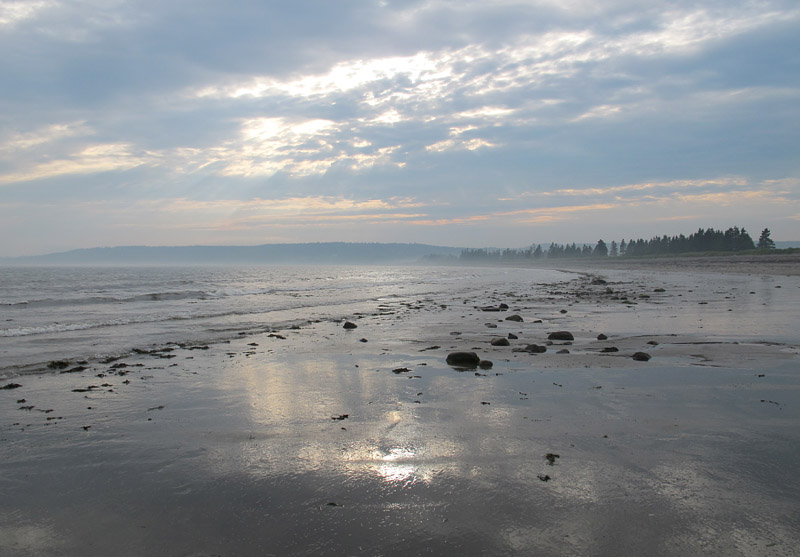
. . . the fog is really quicksilver. It may look still and static, but don’t let that fool you. One minute it is a thick grey blanket, the next a wispy white cloud. When I look away briefly it evaporates completely, to rematerialize moments later along the shore.
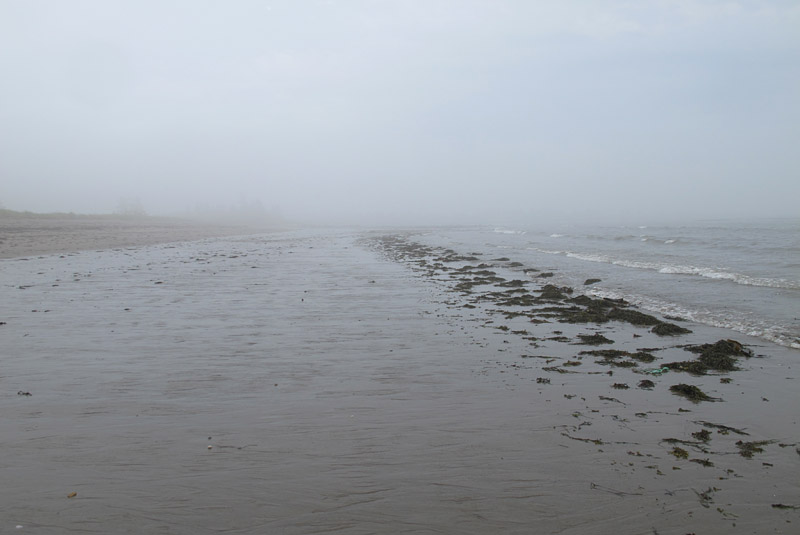
When the fog is in its grey blanket phase, our attention is focused in close. We consider the sediment at our feet because there is little else to look at. Between our footprints the sand is dissected by small dendritic tidal outflow channels.
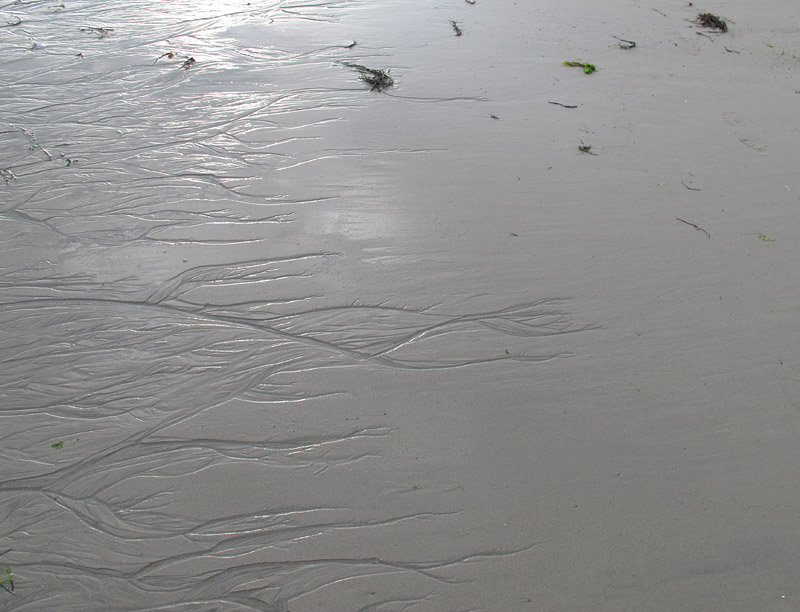
These originate near the top of the intertidal zone, and develop gently downslope.The channels become pervasive and intertwined, like giant meiosing chromosomes. Read more…
A View from the Edge
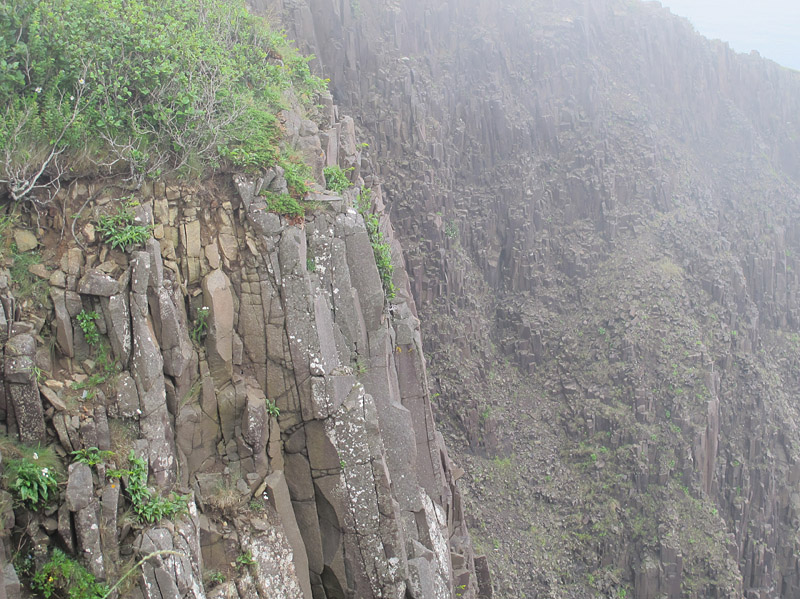
Southwest Head, Grand Manan Island, New Brunswick
When you stand in this place, there is no question that you are at the edge. Miss your step and you will plummet 150 feet or so before you catch the next one. If you survive the drop and start swimming southward, you won’t hit land until you reach Bermuda (if you are lucky) or maybe Puerto Rico (if you are less lucky).

Geologically, too, this place is rather edgy. The fabulous columnar bedrock dates from a time that was right at the margins; at 201 million years old, the Dark Harbour Member of the Grand Manan Basalt sits almost precisely at the boundary between the Triassic and Jurassic Periods (the boundary is currently dated at 201.3 Ma). The Grand Manan Basalt is part of the same unit as the North Mountain Basalt, a remarkably extensive formation that underlies the bay as well as making up the Nova Scotia shore from Cape Blomidon to Brier Island.
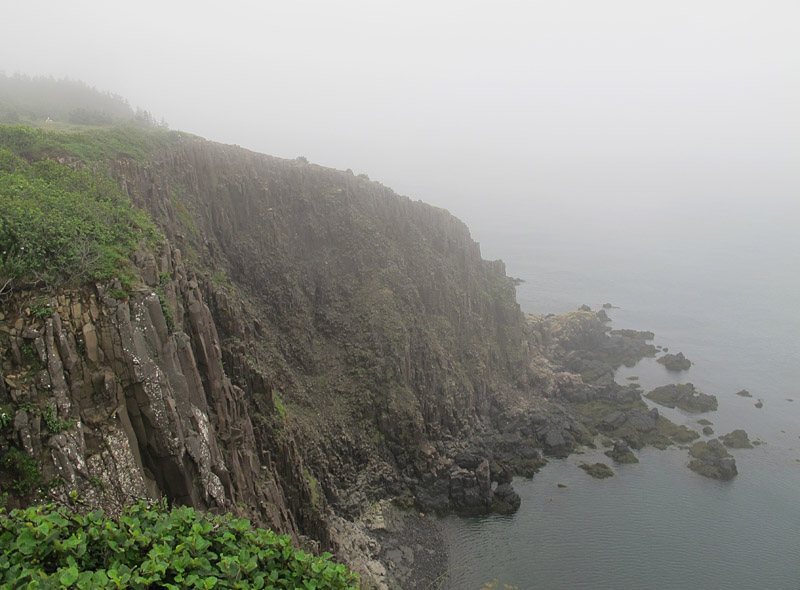
These basalts date from a time of tremendous global change. The ancient supercontinent of Pangaea had formed about 300 million years ago. When it began to split apart a hundred million years later, the crust was stretched and rift valleys developed in various places. The Fundy Basin formed along one of those rift valley systems, and immense lava flows were associated with the rifting. Basalts, including those at Southwest Head, are the crystallized evidence of the very different place this was 200 million years ago. Read more…
Tackling the Ctenophores
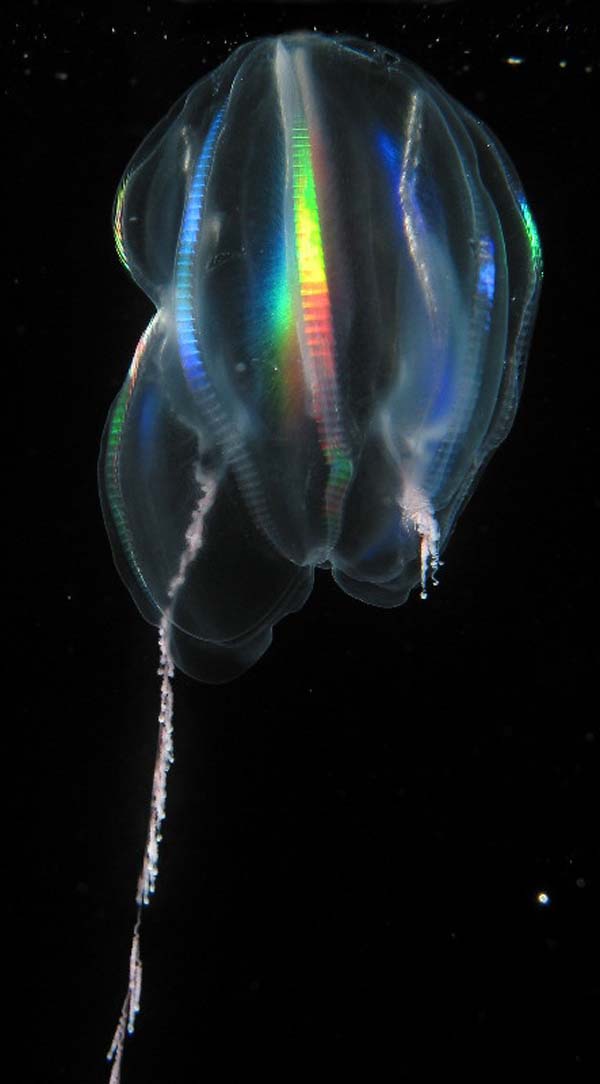
The modern ctenophore Mertensia ovum (NOAA photograph)
For the past decade or so, my colleagues and I have been working to make sense of the fossils we are collecting from the William Lake site in central Manitoba (some research downloads can be found here, while a description of the fieldwork is here). Many of these specimens are difficult to interpret, as they represent groups that are poorly known elsewhere in the fossil record. We find ourselves doing endless photography and microscopic study, and we carry out a lot of literature research.
We also endeavour to examine comparative material whenever we can. Living and working in Winnipeg it can be difficult to carry out first-hand examination of modern marine organisms, since we are located almost as far from the ocean as you can get in North America! As a result, when I travel I try to visit collections elsewhere.
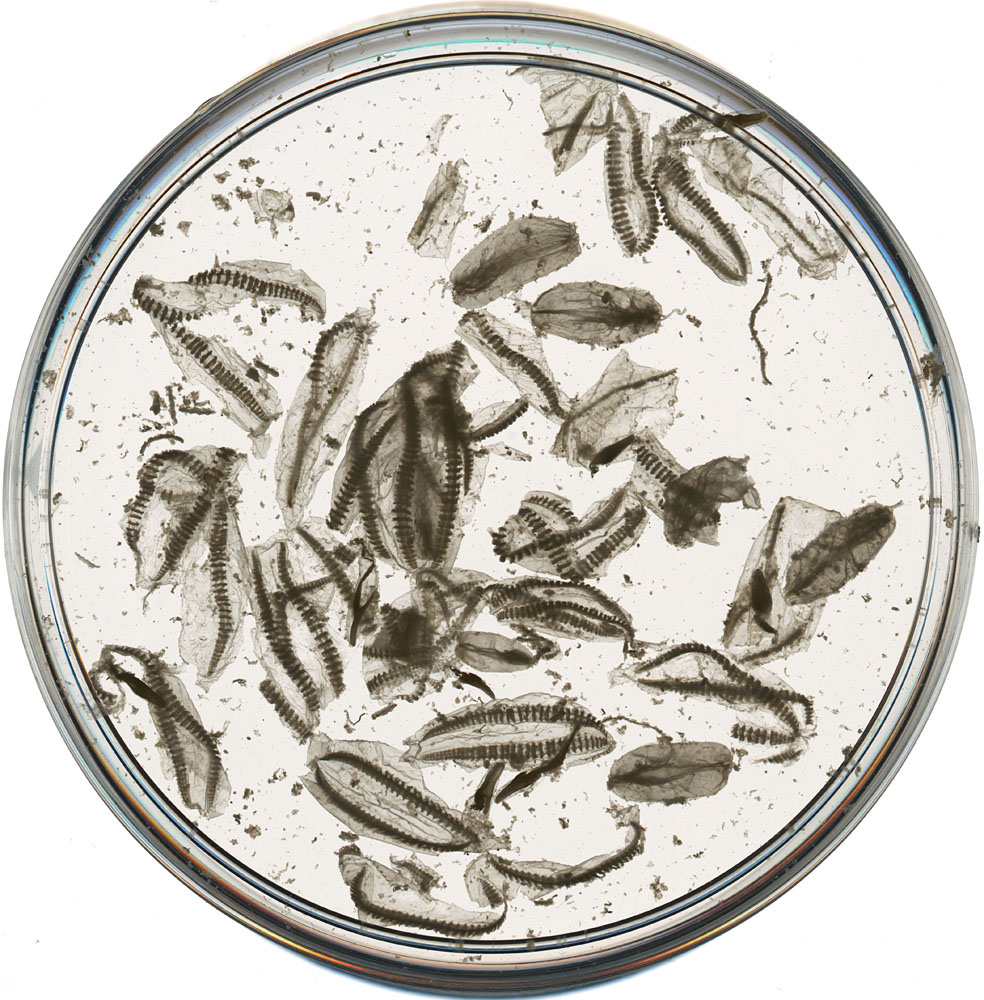
Fragmented specimens of the modern ctenophore Pleurobrachia sp., in a petri dish
The fossils that have risen to the top of my “research heap” are odd little structures that show considerable evidence of being preserved ctenophores, or comb jellies. We have been working to image and document these, and have reached the stage where we need to finalize our interpretation of the various features so that a paper can be written. Read more…
Passamaquoddy Abstracts
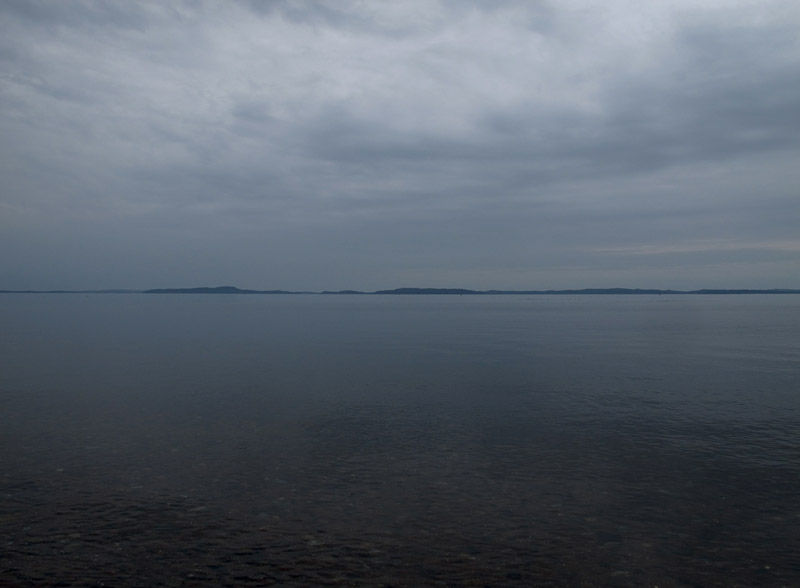
Deer Island and some smaller islands, viewed from Saint Andrews
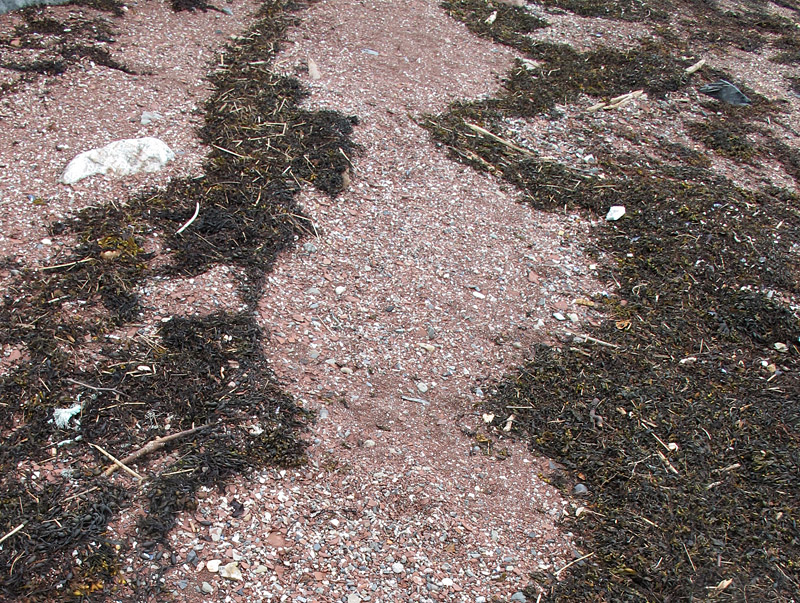
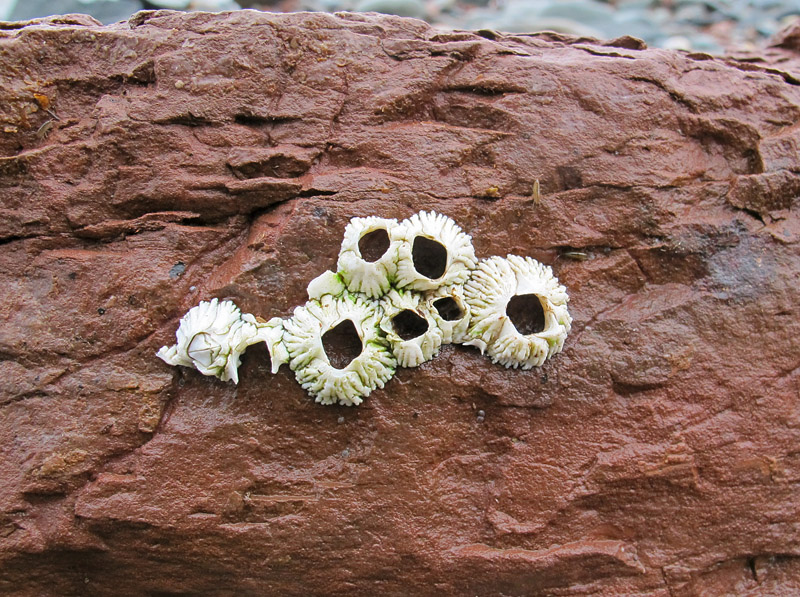
Under a slaty summer sky, shoreline and sea are simply surfaces. Objects on the strand lose meaning; they have become abstract forms floating between flat light and milky water. Barnacle shells are empty, the seaweeds fading, transmuted to pale remnants of their former selves. Small ripples slop wearily against moist rocks, too lazy to make a sound. Even the gulls are silent.
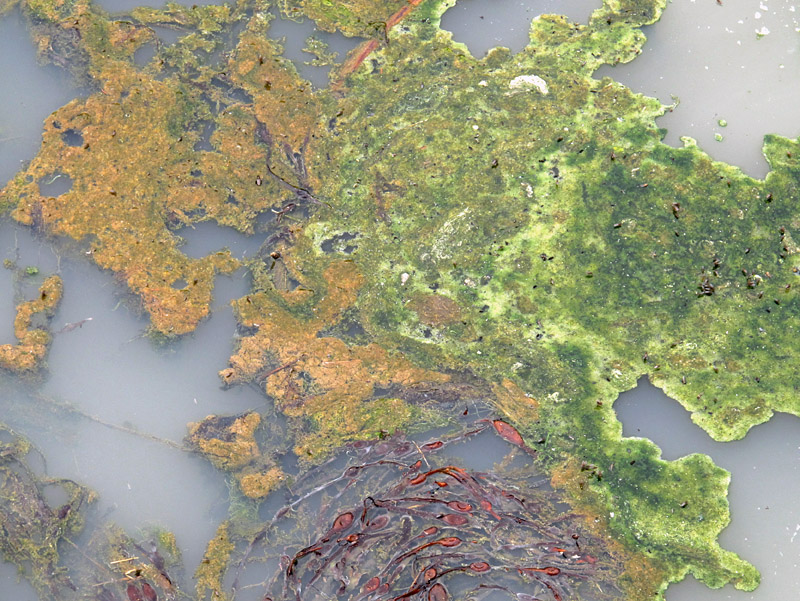
Algae and bacteria in a salt marsh channel do their best impression of a Jackson Pollock
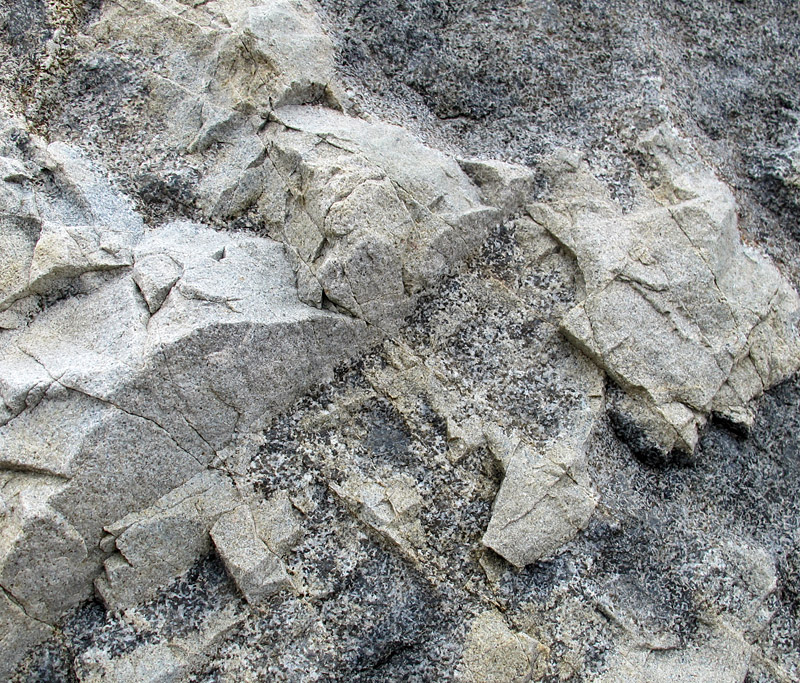
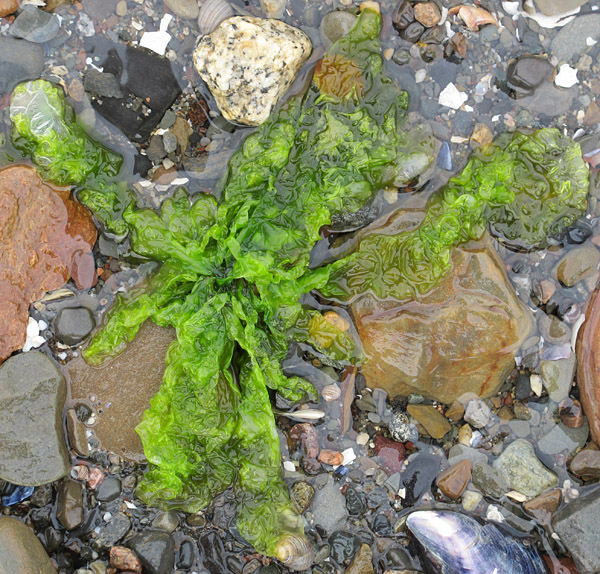
Ulva (“sea lettuce”) in a shallow tidal channel
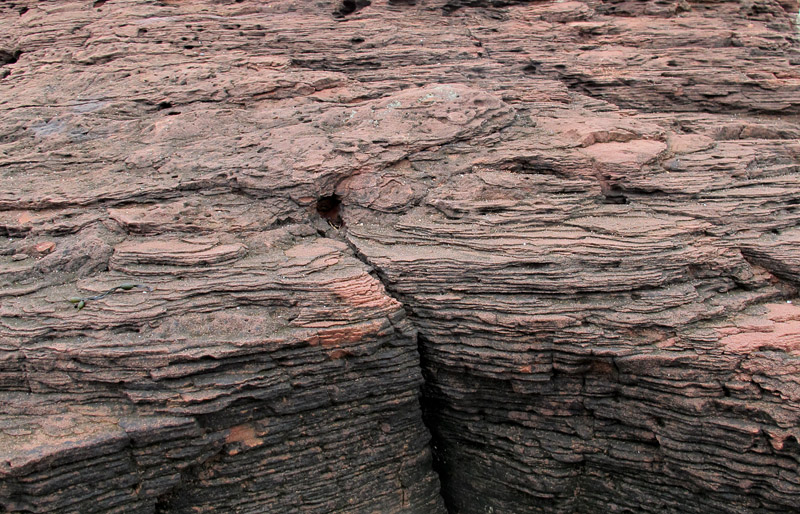
Thinly laminated sandstone bedrock
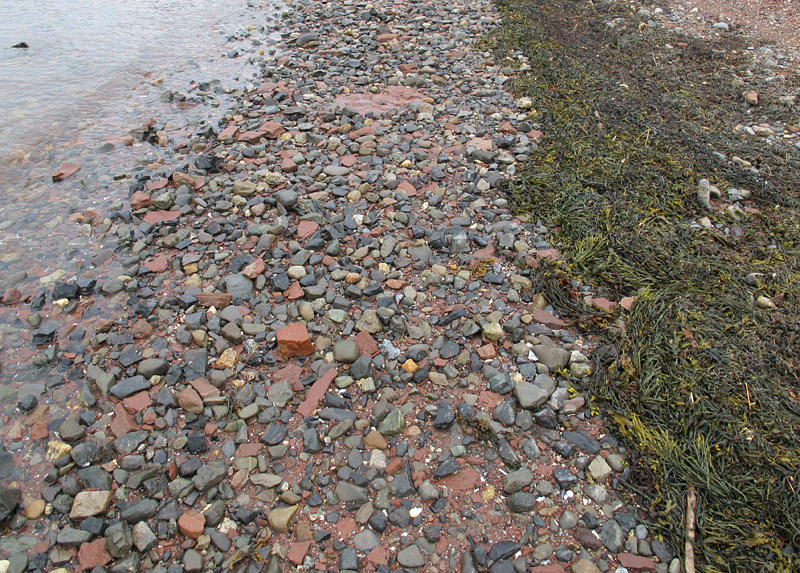
All of these photos were taken today along the point at the southeastern tip of Saint Andrews, New Brunswick.
© Graham Young, 2013
Like Snow in June?

Ice pans in the mouth of the Saskatchewan River, Grand Rapids, Manitoba
Ice is commonly seen on the big Manitoba lakes well into May. Nevertheless, when we arrived in Grand Rapids on the afternoon of May 25th I was surprised to see a mass of ice pans stretching from near shore out toward the eastern horizon. I had heard that the ice was hanging on late this year in Lake Winnipeg’s north basin, but this still seemed extreme. At this rate, there might still be scattered drift hanging on well into June!

The bridge at Grand Rapids
Through the night a west wind blew, driving the ice out toward the middle of the lake. The morning dawned a soft grey-pink, and when I walked down to the shore I was surprised that the ice had largely dissipated. Still, the light was perfect and there were birds everywhere. In the near-Arctic chill emanating from the water, I snapped these photos before heading for breakfast. I had to be quick; bannock toast and pan-fried potatoes wait for no man! Read more…
Life and Times
For the past couple of years I have been a member of the group working to organize the 2013 GAC-MAC Conference (Geological Association of Canada – Mineralogical Association of Canada). The meeting is now just a month away and there has been a steady stream of tasks: editing guidebooks, organizing field trips, sending out advertisements, attending meetings … which helps to explain why posts on this page have been rather thin lately. It will be a really good meeting, and it will be really good to have it over with!
One of the most exciting parts of the conference, from my point of view, will be a symposium in honour of my M.Sc. supervisor, Rolf Ludvigsen, titled Life and Times of Phanerozoic Seas. The session description states:
This symposium is to celebrate the work of Rolf Ludvigsen. Rolf has been a major force in invertebrate paleontology in Canada for nearly four decades, mainly specializing in trilobites. After leaving academia, his focus shifted toward the popularization of paleontology. This Special Session encourages a wide variety of presentations about organisms and their activities in ancient seas.
This description says a lot, but it also leaves out a lot. As my supervisor at the University of Toronto, Rolf was mercurial, confrontational, charming, demanding, maddening, entertaining, and tremendously intimidating. He challenged his students by expecting nothing but the best from us, and his approach got results. Several of his former students and postdocs have gone on to successful professional careers in paleontology, and his influence has been immense. The full-day session is organized by Rolf’s former students and colleagues; we are sorry that he cannot be physically present, but his presence will be felt.

Rolf Ludvigsen with students current and past at the 1986 Albany Canadian Paleontology and Biostratigraphy Seminar. L-R: me, Steve Westrop, Brian Pratt, and Rolf. Our cups undoubtedly hold coffee.
World Water Life
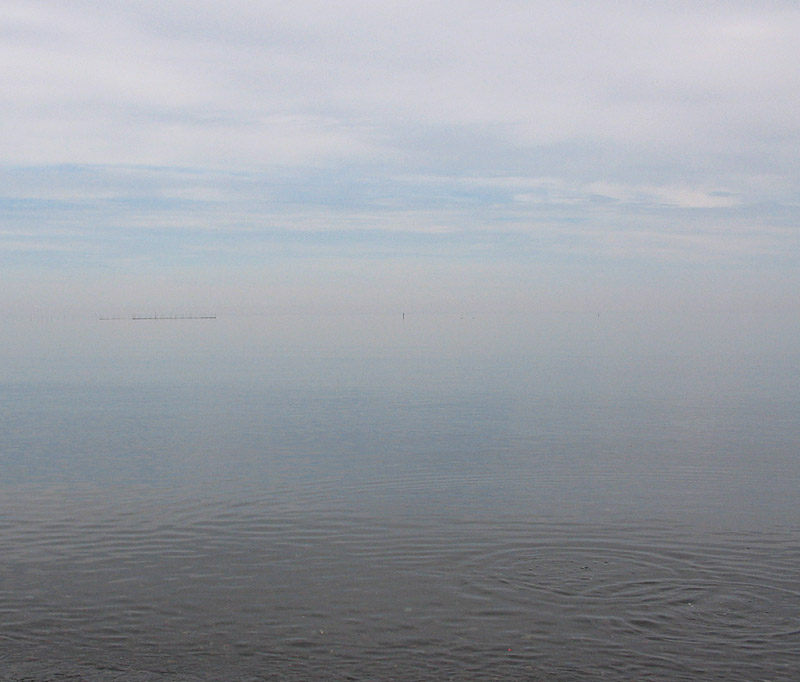
Whale Cove, Grand Manan Island, New Brunswick: a still morning, with a herring weir on the horizon
This morning I awoke from a dream. I was standing on a darkened shore, looking out toward the unbroken line of pale horizon. The sea was still and deep, immense and incomprehensible.
I got up and put water into the coffee pot. After breakfast, we drove downtown. The talk on the radio was of the risk of flooding in the Red River Valley, the result of deep snow that accumulated here through the winter. This land is flat, a surface of horizontal clay deposited at the bottom of what was, at the time, the world’s largest lake.
Over the bridge, we crossed the still ice-covered waters of the Assiniboine River, which constantly transports phosphorus and nitrogen that have washed from the fields and feedlots of Saskatchewan and western Manitoba. A little farther along we could see the Red River on our right, carrying those nutrients to Lake Winnipeg, where they will contribute to the ongoing problems of anoxia and cyanobacterial blooms. We passed numerous buildings faced with mottled limestone, every slab of it holding the skeletons of creatures that lived in the waters of a warm, tropical sea.
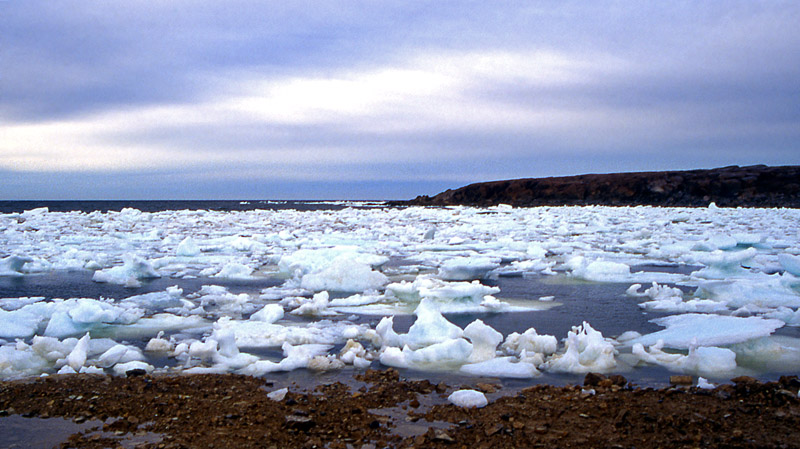
Water in all its physical forms at Airport Cove, Churchill, Manitoba
Marble Table
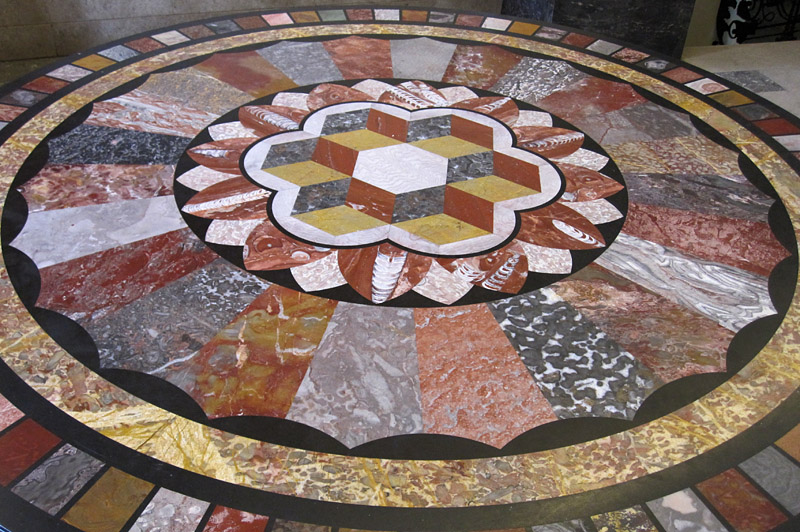
Wandering through the Earth galleries at the Natural History Museum a few years ago, I came upon this splendid marble table. The intricate inlay work highlights a range of mid-Paleozoic fossils: cephalopods, corals, algae, and stromatoporoid sponges, enclosed in variously coloured veined and brecciated limestones. Read more…
Umbilicus
With the work I have been doing on the Manitoba Legislative Building, I thought I would spend some time in the New Brunswick Legislative Assembly Building during a recent visit to Fredericton. It is a very different structure, an intimate, almost house-like Second Empire building, in contrast with Manitoba’s imposingly cavernous neoclassical parliament. I had planned to mostly look at geological features of this building, but I was distracted …

An umbilicus is an origin, the place at the middle or beginning of something larger. For humans it is another word for our navel. The navel is the point of expansion for your body, where it gained sustenance as you grew in the womb. For coiled molluscs such as snails and Nautilus, the umbilicus is the hole at the centre of its shell whorls, the axis of its coils, effectively the place where the coiling growth began.
My origins are in an old place. In the middle of that old place, most appropriately, is this uniquely beautiful open spiral. The umbilicus of the town and the province.

Death Horizon
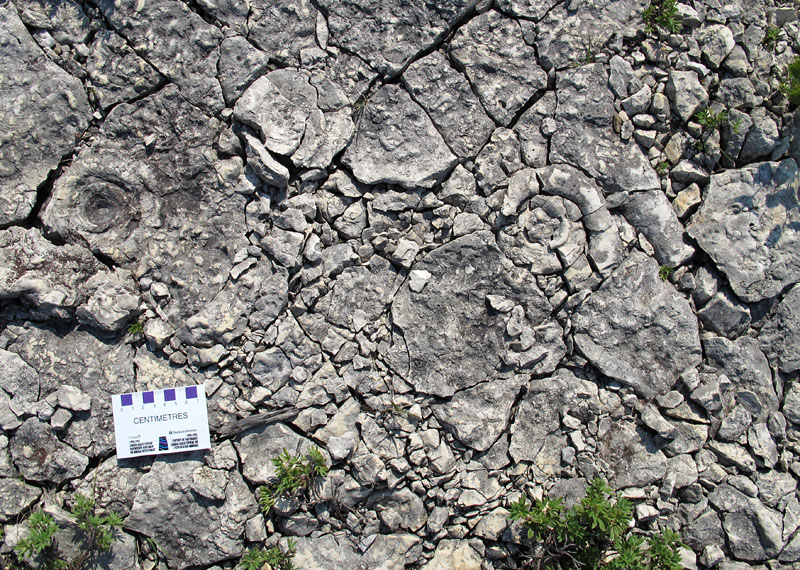
Cephalopods belonging to the genus Kinaschukoceras, spread across a bedding plane surface
When people discuss the extinction of dinosaurs and its possible cause by catastrophic events, one question that often comes up is, “if the last dinosaurs all died out at once, then where are the bodies”? Shouldn’t we find the carcasses, the Tyrannosaurus and Triceratops stretched out as if asleep, under the soft blanket of iridium-enriched dust that emanated from the Chicxulub impact site?
Let’s think about this for a minute or two. Any bedrock exposure that happens by chance to intersect the Cretaceous-Paleogene boundary is just that: a chance happening. And we can thus apply the laws of statistics to the issue of dinosaur bodies. I am not going to challenge either of us to do the math, but think about how rarely you see vertebrates larger than, say, a house cat, as you walk, drive, or fly across the surface of this planet. Read more…


 Ancient Shore